The following research excellence clusters were funded in 2019.
Established Clusters - 2019
Advanced Materials Manufacturing
The capabilities of innovative, transformative products will be shaped by the materials from which they are made. Tomorrow's complex products need to be safer, stronger and more sustainable. This is one of the great scientific challenges of our time, where UBC has made a sustained, international contribution, anchored on digital manufacturing and advanced simulations of materials.
Cluster Lead: Warren Poole
Airway Centre
There are currently no disease-modifying therapies for 2.5 million Canadians suffering from Chronic Obstructive Pulmonary Disease (COPD). The aim of The UBC Airway Centre is to address the growing burden of COPD and other airway conditions in BC and elsewhere by finding better diagnostics and therapies for patients.
Cluster Lead: Don Sin
BC Diabetes Research Network
The BC Diabetes Research Network GCRC cluster will strengthen diabetes research in BC from the lab bench to clinical trial across themes from cure-oriented diabetes research to diabetes prevention to diabetes complications.
Cluster Lead: Bruce Verchere
BCREGMED: Cellular and Regenerative Therapies through Collaborative, Innovative Science
The British Columbia Regenerative Medicine Initiative (BCRegMed) supports the coalescence of academic, industry and government entities to foster collaborative activities within the BC regenerative medicine community. The group aims to engage and mobilize the scientific and entrepreneurial community in BC to facilitate the translation and commercialization of basic discoveries.
Cluster Lead: Fabio Rossi
Biodiversity Research: An Emerging Global Research Priority
The most remarkable feature of our planet is the diversity of its life forms, but this biodiversity is threatened by anthropogenic impacts, including climate change. The Biodiversity Research Cluster will identify global change impacts on biodiversity and offer solutions to challenges associated with these changes.
Cluster Lead: Loren Rieseberg
Designing for People (DFP)
Designing for People (dfp.ubc.ca) takes an intensely multidisciplinary approach to human-centered research and design of interactive technologies, to address complex problems requiring diverse viewpoints and methodologies by integrated teams. DFP is sharing this approach through many pathways, from an NSERC CREATE graduate training program to regional outreach and translation initiatives.
Cluster Lead: Karon MacLean
Diversified Agroecosystem Cluster
The Diversified Agroecosystems Research Cluster uses ecological and systems analysis perspectives for integrated research on sustainable food systems that can feed the world while cooling the planet, protecting biodiversity, and promoting food sovereignty. Our network brings together leading researchers worldwide to create novel, next-generation, grassroots generated and open-data food systems assessment strategies from citizen science to remote sensing.
Cluster Lead: Hannah Wittman
Gynecologic Cancer Initiative
The Gynecologic Cancer Initiative will accelerate transformative research and translational practice on prevention, detection, treatment, and survivorship of reproductive cancers. This will be done in collaboration with women throughout BC and through synergistic partnering of research institutions, scientists, and clinicians to reduce the incidence and mortality of these cancers by 50% in the next 15 years.
Cluster Lead: Gavin Stuart
Language Sciences Initiative
UBC is a centre for ground-breaking research and education in the science of language that together enable positive impacts in society. UBC Language Sciences facilitates collaborations that advance our understanding of how language shapes our individual and collective human experience.
Cluster Lead: Janet Werker
Wingspan: Dis/ability Arts, Culture & Public Pedagogy
Wingspan Dis/ability Arts, Culture & Public Pedagogy Cluster is composed of and by the Wingspan Collaborative at UBC, which is an intellectual ‘studio’ of interdisciplinary scholars in disability studies, arts, culture and public pedagogy across many disciplines who collaborate and establish research excellence on common projects regarding the rights of people with disabilities and who pro-actively promote the idea that while individual disabilities pose impairments, they should not be seen as deficits but instead as differences that enrich collective human experience and the arts. We identify variously as disabled, non-disabled or as artists who focus on disability aesthetics between and among artist/researcher/teacher in the broadest sense of these terms, hence, we are Dis/A/R/Tographers in an unequal global world. We perform inclusion and accessibility through the first Canadian Dis/Deaf artist-residency program launched in the K-12 schools. Through public pedagogies, we ask: What do inclusion and accessibility mean to our schools and the dis/Deaf artists and the students who collaborate with them? What and how we can learn from the voices of students and artists with disabilities?
Cluster Lead: Leslie Roman
Emerging Clusters - 2019
Action on Sepsis
Sepsis kills more individuals worldwide yearly than breast cancer, prostate cancer, and HIV combined. Sepsis arises when the body’s response to an infection damages organs. Our team ‘Action on Sepsis’ will deliver cutting-edge innovation in the prevention, diagnosis, and treatment of sepsis in British Columbia and around the world.
Cluster Lead: Mark Ansermino
Bee Health
In response to recent shortages and alarming declines of wild and managed bee populations, the BeeHIVE cluster explores the honey bee’s role as pollinator, producer, and biomonitor. Using innovative fingerprinting tools, we seek to understand how these critical functions are impacted by environmental exposures (both natural and human caused), with the common goal of improving the fate of the honey bee.
Cluster Lead: Dominique Weis
Big Data and Computational Social Science Research Cluster
Big data refers to data that is large in scale, primarily data that has been collected through, or made available by digital technologies; e.g., Twitter Posts, Facebook posts, mobile phone records, comments on newspaper articles, tax filings, voter registration, restaurant reviews, scanning of archival documents, etc. There are societal and scholarly demands to develop high quality personnel who have the skills to analyze these data. The purpose of the Big Data and Computational Social Science Research Cluster is to strengthen the research community working in this area by attracting attention to work currently being done by scholars at UBC, facilitating networking amongst those conducting research in this area, developing synergies amongst those currently working in this area at UBC, and developing infrastructure and pursuing funding opportunities to enable UBC to develop further in this scholarly field.
Cluster Lead: David Tindall
Biomedical Imaging and Artificial Intelligence
Our Grand Challenge is to develop a deeper understanding of how molecular, cellular and tissue structure and organization relate to normal and diseased tissue function. To address this challenge, we will make use of vast amounts of data from multi-modal, multi-scale biomedical imaging, which we will collect/access, manage, and interpret holistically through advanced artificial intelligence. This understanding will help alleviate pressures on healthcare systems by enabling effective personalized medicine.
Cluster Lead: Tim Salcudean
Bionics Network
Our Grand Challenge is to implement a living lab model in the design and development of bionic devices, where the needs of end users are built into the devices from the start. To address this challenge, we engage with patients and industry specialists to develop project teams that connect these end users with interdisciplinary teams of scientists, engineers and clinicians with a goal of generating assistive and medical products that offer measurable improvements in quality of life.
Cluster Lead: John Madden
Blockchain at UBC
The Blockchain is a critical ledger that enables a trusted environment for transactions without the intervention of a centralized mechanism. Actual and proposed applications encompass cryptocurrencies, (e.g. Bitcoin) payment systems, clearing and settlement, securities trading, supply chain management, identity management, notarial services, the Internet of Things, land transfer and registration, health record keeping, voting, intellectual property management, and beyond. Blockchain @UBC harnesses research talent from across UBC and collaborations with an industry consortium to address some of the most significant challenges facing this rapidly emerging technology, including security, scalability, and records lifecycle management.
Cluster Lead: Victoria Lemieux
Critical+Creative Social Justice Studies-The Global Condition Working Group
The Critical+Creative Social Justice Studies is an international, interdisciplinary collaborative framework of scholars, artists and activists. With an anti-colonial and intersectional approach, its speculative, critical, and critical practices and research aim at the development of a transformative approach that attends to current social and ecological conditions.
Cluster Lead: Denise Ferreira da Silva
Dynamic Brain Circuits in Health and Disease Research Excellence Cluster
A fundamental challenge within Neuroscience is to understand behaviour through connectomics, a knowledge of molecular and cellular information mapped onto the pathways that connect brain cells together. A central focus for neuroscientists at UBC is the study of brain connections, including their dynamic changes during normal development and learning and how these connections become dysfunctional in neuropsychiatric disease.
Cluster Lead: Timothy Murphy
Harnessing the Social Exposome to Reduce Inequalities in Child Health and Development in Canada
Our Cluster will bring together experts in medicine, public health and policy, and the social and natural sciences to determine how children's social environments influence their physical and psychological exposures to impact their health and development and lead to the persistent health disparities in our society. We will do this by exploring the "social exposome," the cumulative social exposures over the life course that influence development from conception onwards.
Cluster Lead: Michael Kobor
Marine Systems Research Cluster
The Marine Systems Research Cluster brings together a diverse group of USC researchers from electrical, computer & systems engineering, computer science, naval architecture & marine engineering, public health and psychology to reduce the environmental footprint and increase the safety and situational awareness of both merchant and naval ships.
Cluster Lead: David Michelson
Migration
The UBC Migration Research Cluster explores the global challenge of international migration. Bringing together researchers from a wide range of disciplines and community organizations, this cluster examines the determinants and consequences of international migration, and focuses on the legal governance of migration and refugee flows, immigrant and refugee integration, the nexus between migration and Indigeneity, and the relationship between immigration and national identity.
Cluster Lead: Antje Ellermann
Origins of Balance Deficits and Falls
The cluster's research aims to advance our understanding of the mechanistic principles of healthy balance control and the mechanisms that underlie balance deficits and falls. Our research will provide the foundation for developing improved clinical balance screening tools, effective therapeutic interventions and new technological advances to reduce the likelihood and impact of balance deficits and falls.
Cluster Lead: Mark Carpenter
Present histories: Interdisciplinary and contemporary engagements with the past
This Research Cluster proceeds from the understanding that the questions we ask about our time depend on full and evidence-based understandings of the past, and, at the same time, that present-day concerns continually shape and inform our engagement with that past. We seek to explore both the forms of representation of the past, and their uses: how the past is excavated (literally and metaphorically) and expressed in relation to contemporary practices and concerns.
Cluster Lead: Anne Murphy
Quantum Computing Research Cluster
Quantum computing is the next wave of fundamental science poised to revolutionize human experience. We want to discover and create the technology on which quantum computations will be run in the next two decades. The challenge is to produce a universal quantum computer that is demonstrably scalable and which also achieves a practical quantum advantage over classical computers.
Cluster Lead: Lukas Chrostowski
Transformative Health and Justice Research Cluster
This Cluster will address the Grand Challenge of the 'criminocentric' understanding of crime, rehabilitation, and recidivism, by creating a research and policy agenda to address health and justice inequities experienced by individuals impacted by the criminal justice system. We will focus on three themes: (1) Determinants of Health and Justice, (2) Incarceration, (3) (Re)integration.
Cluster Lead: Ruth Elwood Martin
UBC Interdisciplinary Research-Based Theatre Collaborative
This UBC Research-Based Theatre collaborative builds out of a growing interest from researchers across disciplines to employ creative means of knowledge exchange with stakeholders, communities, and other researchers. Through careful and ethical presentations of dramatized data, Research-Based Theatre catalyzes dialogue towards positive change through interactive engagement with diverse audiences and communities.
Cluster Lead: George Belliveau
Women's Health Research Cluster
Women’s health research is vital to explore how unique factors, both biological and societal, contribute to health in women. Women experience poorer health from missed diagnoses, minimized symptoms, greater burdens of specific diseases, and poorly targeted treatment than men. Although there is much focus on how biological sex alters disease trajectory and outcome, it is important to study the physiological and societal challenges unique to women that directly influence women’s health. This research cluster and network will provide the research and clinical communities with invaluable information that will make help make women healthier.
Cluster Lead: Liisa Galea
The following research excellence clusters were funded in 2018.
Established Clusters - 2018
Advanced Materials Manufacturing
The capabilities of innovative, transformative products will be shaped by the materials from which they are made. Tomorrow's complex products need to be safer, stronger and sustainable. This is one of the great scientific challenges of our time, where UBC has made a sustained, international contribution, anchored on digital manufacturing and advanced simulations of materials.
Cluster Lead: Warren Poole
BCREGMED: Cellular and Regenerative Therapies through Collaborative, Innovative Science
BCRegMed seeks to enhance the research of regeneration or replacement of diseased cells and tissues using innovative technologies such as stem cells, engineered tissues, biomaterials, or molecules. Our community is focused on the development of treatments for a wide variety of life threatening illnesses with a specific focus on aging-related chronic conditions such as diabetes, burns, spinal cord injury, heart disease, and autoimmunity.
Cluster Lead: Fabio Rossi
Biodiversity Research: An Emerging Global Research Priority
The most remarkable feature of our planet is the diversity of its life forms, but this biodiversity is threatened by anthropogenic impacts, including climate change. The Biodiversity Research Cluster will identify global change impacts on biodiversity and offer solutions to challenges associated with these changes.
Cluster Lead: Loren Rieseberg
BioProducts Research Cluster
The BioProducts lnstitute's (BPI) goal is to accelerate the extraction of high value products like bio-materials, bio-energy and bio-chemicals from bio-based resources. BPI is an inter- and multi-disciplinary research team comprising of over 39 scientists, engineers, and market/policy experts that brings together the strengths of six of UBC's strategic research centres (CAWP, MSL, PPC, AMPEL, BRDF, CERC) in support of advancing bio-economy research and education.
Cluster Lead: Mark Martinez
Data Analytics and Systems Science (DASS) to Optimize Heart + Lung Health
The DASS cluster is creating a system-wide, data-driven solution to harness the power of "omics" biomarkers in optimizing health and minimizing disease. Our innovative and interconnected platforms for secure data collection and sharing, "multi-omics" analysis and integration, and real-world biomarker testing will enhance personalized diagnostic and therapeutic development for heart and lung diseases.
Cluster Lead: Bruce McManus
Designing for People (DFP)
Designing for People (dfp.ubc.ca) takes a broadly multidisciplinary approach in people-centered design for interactive technologies, to address complex human-facing research and design problems requiring diverse viewpoints and methodologies deployed by integrated teams. An NSERC CREATE-funded training program launched in September 2017 is imparting this knowledge to a new generation of graduate students.
Cluster Lead: Karon MacLean
ForLives: Forests and Livelihoods for Sustainable Development
ForLives co-creates novel, grounded and interdisciplinary research in cooperation with global partners to support of our vision of a world where local, forest-led sustainable development drives human prosperity in a manner which sustains and protects forests - one of the world's most important resources.
Cluster Lead: Robert Kozak
Language Sciences: UBC and Beyond
Language is our quintessential human capacity, suffusing our communities, technology, and minds and bodies. Research in the Language Sciences helps us to better understand mind/body connections, transnationalism and sustainability, and language in the information economy. Language Sciences brings together language research, training, and community and industry engagement and promotes innovative, transformative research on the human condition.
Cluster Lead: Janet Werker
Microbiome Research Network: Exploring Microbial Interactions and Microbiome Function
Despite their life-sustaining activities within us and throughout the environment, microbial communities, or microbiomes, remain poorly understood. The UBC Microbiome Research Network will build links between microbial ecology, evolution, and animal-associated microbiomes to change our understanding of the role of microbial communities in health, environmental balance, and parallels between them.
Cluster Lead: Steven Hallam
The UBC Airway Centre
There are currently no disease-modifying therapies for 2.5 million Canadians suffering from Chronic Obstructive Pulmonary Disease (COPD). The aim of The UBC Airway Centre is to address the growing burden of COPD and other airway conditions in BC and elsewhere by finding better diagnostics and therapies for patients.
Cluster Lead: Don Sin
Emerging Clusters - 2018
Biomedical Imaging and Artificial Intelligence
Our research cluster aims to develop a deeper understanding of how molecular, cellular and tissue structure and organization relate to normal and diseased tissue function, by making use of vast amounts of data from multi-modal, multi-scale biomedical imaging, which we will collect/manage and interpret holistically through advanced artificial intelligence.
Cluster Lead: Tim Salcudean
Bionics Network
Our aim is to create affordable and highly effective prosthetic devices. We will achieve this by combining expertise in sensors, artificial muscle, neural interfaces, 3D printing of plastics, metals, gels and cells, robotics, mechatronics, communications, signal processing, and rehabilitation.
Cluster Lead: John Madden
Blockchain at UBC Cluster
Trust in institutions and information systems has dropped dramatically in recent years. Blockchain technology has emerged as one solution to declining levels of trust, due to its potential as a digital trust infrastructure. Vancouver is a leading innovation ecosystem for blockchain technology, which Blockchain@UBC is helping to grow.
Cluster Lead: Victoria Lemieux
Critical Racial & Anti-Colonial Studies Thematic Network (CRACS)
This research cluster gathers faculty and graduate students working on issues concerning groups marginalized on the basis of indigenous, racial, sexual-gender, and other social categories. The proposed activities consist of collaborations between critical theory and creative + performing arts designed to facilitate the elaboration of a program for transformative practices and theories of social justice.
Cluster Lead: Denise Ferreira da Silva
Diabetes: From Beta Cells to Bedsides
The Diabetes: From Beta Cells to Bedsides cluster will strengthen diabetes research in BC from the laboratory bench to clinical trial, across themes from cure-oriented diabetes research, to diabetes prevention, to diabetes complications.
Cluster Lead: Bruce Verchere
Dynamic Brain Circuits in Health and Disease Research Excellence Cluster
A central focus at UBC is the study of brain connections, including their dynamic changes during normal development and learning and how these connections become dysfunctional in neurological and neuropsychiatric disease. A map of the brain's vital wiring diagram (the "connectome") describes the structural and functional circuits connecting brain cells through specialized structures called synapses. Dynamic Brain Circuits-based research is a step towards developing circuit-based treatments for brain disease.
Cluster Lead: Timothy Murphy
Educational Neuroscience
Our aim is to fuse neuroscience and child learning research into one novel discipline: educational neuroscience. We will bring together researchers from previously independent disciplines (i.e., neuroscience, psychology, education) to create the UBC Research Cluster in Educational Neuroscience. This cluster will have a widespread impact on children, educators, families, and researchers, ultimately improving the educational experiences of children in BC and beyond.
Cluster Lead: Lara Boyd
Global Challenges to Democracy: Rights, Freedoms, and Self-Determination
The rise of populist nationalism, the spread of regimes with formally democratic features that coexist with authoritarianism, the backlash against human rights defenders, the attempt at suppressing the global surge of Indigenous protest: these are symptoms of global challenges facing democracy. What are the ways in which diverse practitioners and activists reimaglne more inclusive democracies and global institutions that enhance human rights and indigenous self-determination, and work towards overcoming these challenges?
Cluster Lead: Maxwell Cameron
Hidden Costs of Global Supply Chains (HCGSC)
The Hidden Costs of Global Supply Chains (HCGSC) cluster is an emerging cluster at UBC that brings together top global governance scholars, leading journalists and major media organizations. The HCGSC cluster is an action-based research partnership to engage communities, mobilize new knowledge, and facilitate policy response to the social and environmental impacts of global supply chains.
Cluster Lead: Peter Klein
Indigenous/Science at UBC: Partnerships in the Exploration of History and Environments
We bring Western scientists and Indigenous people together to 'practice reconciliation' through equitable partnerships that investigate Indigenous histories and landscape use via the analysis of material culture. Our expertise in isotope and trace element geochemistry, spectroscopy, and archaeology will be applied to Indigenous-led research questions with practical implications for Indigenous communities.
Cluster Lead: Andrew Martindale
Migration
The UBC Migration Research Cluster explores the global challenge of international migration. Bringing together researchers from a wide range of disciplines and community organizations, this cluster examines the determinants and consequences of international migration, and focuses on the legal governance of migration and refugee flows, immigrant and refugee integration, and the relationship between immigration and national identity.
Cluster Lead: Antje Ellermann
Origins of Balance Deficits and Falls
The Origins of Balance Deficits and Falls Cluster's research aims to advance our understanding of the mechanistic principles of healthy balance control and the mechanisms that underlie balance deficits and falls. Our research will provide the foundation for developing improved clinical balance screening tools, effective therapeutic interventions and new technological advances to reduce the likelihood and impact of balance deficits and falls.
Cluster Lead: Mark Carpenter
Pain Research Network: Confronting a Global Challenge
It is estimated that 7 million Canadians suffer from debilitating pain on a daily basis. This pain is too often unrecognized, inadequately assessed, underestimated, and/or ineffectively controlled. The goal of the Pain Research Network is bring together investigators who work on pain, clinicians who treat pain, and patients who suffer from pain to identify better approaches for the management of pain in Canada. Investigators range from those in molecular biology and pharmaceutical sciences through those undertaking clinical investigations, others in the behavioural and social sciences and the humanities, and researchers in public health and health services delivery. Our major community engagement partner is Pain BC.
Cluster Lead: Brian Cairns
Physical Activity for Precision Health
Physical activity promotes health and wellness but there is a need to move beyond the "one size fits all" approach. Through collaboration among researchers and key stakeholders, our cluster aims to transform how physical activities are prescribed, monitored, and implemented to promote health and wellbeing across the health continuum and lifespan.
Cluster Lead: Teresa Liu-Ambrose
Re-Imagine Aging
Our 'inward facing' goal is to create a virtual, supportive, interdisciplinary environment that elevates aging research beyond what is possible within a sole discipline. Our 'outward facing' goal is to inform development of a healthy aging strategy for British Columbia and to provide input into Canada's national senior's strategy.
Cluster Lead: Joanie Sims-Gould
Reimbursement and Pricing Policy for Drugs for Rare Diseases
The common issue with rare diseases is the cost: many of these drugs, designated as "orphan drugs", are priced at hundreds of thousands of dollars per year for one patient. Our research cluster will host a meeting of international rare disease decision-makers to explore orphan drug reimbursement policies around the world with the goal of informing the development of better informed decision-making processes for Canada.
Cluster Lead: Larry Lynd
Rhythm Research Cluster
The distinctly human capacity for sophisticated rhythmic play is engaged in diverse musical traditions found the world over. The Rhythm Research Cluster will investigate three questions fundamental to our understanding of musical rhythm and rhythmic play: 1) How do the perceptual processes and cognitive limits governing human rhythmic behavior interact with musical creativity and expression? 2) What is the impact of technologies of musical coordination (from the metronome to the click track) upon our collective engagement with music as a temporal art? 3) What is the relationship between small-scale rhythmic variations (measureable at the millisecond level) and the embodied experience of musical motion? To pursue these questions, the cluster will bring together scholars from the fields of music theory, ethnomusicology, music cognition, and computational musicology, as well as practitioners from the applied fields of composition, performance, and music production.
Cluster Lead: Ève Poudrier
SmarT Innovations for Technology Connected Health (STITCH)
To address the growing prevalence and cost of chronic health conditions, STITCH creates and investigates advanced wearable devices that collect personalized information about our bodies and physical environments. This intelligent interface serves as a Second "Digital" Skin, designed by engineers and clinicians, to expand geography of care and improve outcomes.
Cluster Lead: Peyman Servati
Systematically Identifying, Evaluating, and Responding to Environmental Injustices in Canada
Our team will be systematically identifying environmental injustices in Canada: patterns of pollution and other environmental hazards that fall disproportionately and unfairly on the shoulders of economically or socially vulnerable communities. Next, we will craft effective solutions to these problems and communicate these solutions to government decision-makers.
Cluster Lead: David Boyd
The Frail Young: Care for children with complex illnesses, their families and communities
The Frail Young are children with complex, life-limiting conditions. They have a right to enjoy life, grow and learn to the full extent of their abilities. This cluster aims to create a new, national research agenda and interdisciplinary research teams to support excellent care for these children and their families.
Cluster Lead: Hal Siden
Theatre and Mental Health
We wish to scale up a theatre project with Canadian veterans that looks at using the arts to address men’s mental health issues. Building on the success of Contact!Unload we aim to mobilize what we learned across Canada. In collaboration with counselors and professional theatre artists in four other Canadian cities, we wish to expand the reach of the project to veterans across the country.
Cluster Lead: George Belliveau
Towards a long-term research network for diversified agroecosystems
We are creating a research and outreach network for diversified agroecological farmers and researchers to improve sustainable food security and resilience of farming systems in North America. Our network will develop coordinated experiments and data management systems to build a global data set on diversified farming practices and socio-ecological services.
Cluster Lead: Hannah Wittman
Wingspan: Dis/ability Arts, Culture & Public Pedagogy
The Dis/ability Arts, Culture & Public Pedagogy Cluster is composed of and by the Wingspan Collaborative at UBC, which is an intellectual ‘studio’ of interdisciplinary scholars in disability studies, arts, culture and public pedagogy across many disciplines who collaborate and establish research excellence on common projects regarding the rights of people with disabilities and who proactively promote the idea that while individual disabilities pose impairments, they should not be seen as deficits but instead as differences that enrich collective human experience and the arts. We identify variously as disabled, non-disabled or as artists who focus on disability aesthetics and linger in the liminal spaces between and among artist/researcher/teacher in the broadest sense of these terms, hence, we are Dis/A/R/Tographers in an unequal global world.
Cluster Lead: Leslie Roman
The following research excellence clusters received funding prior to 2018.
Adapting Biosystems - Biodiversity Group
We are a world-renowned centre widely recognized for work on questions fundamental to our understanding of biodiversity.
These four questions are:
- What is the genetic basis of adaptation, and how does this genetic basis shape evolution?
- How does the spatial array of individuals across landscapes affect adaptation?
- How do ecological communities change over time, especially as environmental change accelerates?
- How does biodiversity itself evolve?
Solutions to some of Canada’s greatest environmental challenges hinge on understanding the answers to these basic questions. Our team tackles these challenges through a variety of collaborative projects. By understanding the genetic basis of adaptation and how these genes are distributed across space in lodgepole pine and other conifers we are improving replanting strategies and increasing yield in the face of changing environments. By finding new ways to measure the genetic basis of important traits we are improving crop performance across environments. By determining the factors that promote and maintain biodiversity we are advising on strategies to better protect Canada’s natural heritage.
Advanced Manufacturing for Global Mobility
This cluster is focused on the development of breakthrough advanced manufacturing technologies with a special emphasis on the simulation of multi-scale material transformations – the “digital factory”.
Industry receptors include Tier 1 companies in strategic sectors of the Canadian economy: aerospace, automotive, maritime and pipelines.
BioProducts Institute (BPI)
The BioProducts Institute's (BPI) goal is to accelerate the extraction of high value products like bio-materials, bio-energy and bio-chemicals from bio-based resources.
FBP is an inter- and multi-disciplinary research team comprising of over 30 scientists, engineers, and market/policy experts that brings together the strengths of six of UBC’s strategic research centres (CAWP, MSL, PPC, AMPEL, BRDF, CERC) in support of advancing bio-economy research and education.
Critical Racial & Anti-Colonial Studies: Critical + Creative Social Justice Studies
This research cluster gathers faculty and graduate students working issues affection concerning groups marginalized on the basis of indigenous, racial, sexual-gender, and other social categories.
The proposed activities consist in collaborations between critical theory and creative + performing arts designed to facilitate the elaboration of a program for transformative practices and theories of social justice.
Data Analytics and Systems Science (DASS) to Optimize Heart + Lung Health
The DASS cluster will create a systemic data analytics solution to harness the power of omics biomarkers in optimizing health and minimizing disease.
We will pursue such by creating a data linkage platform, setting up a translational laboratory for new omics test development, building data and network science capabilities, and hosting a omics – analytics workshop for the community. Funding will be used to build and expand strategic partnerships and to create new links for translating omics biomarker research that are robust and tangible.
Dynamic Brain Circuits in Health and Disease
The fundamental mission of Neuroscience is to take molecular and cellular information, together with mapping pathways in the brain, to understand behavior.
A central focus of this research at UBC is the study of brain connections and their dynamic changes during development, learning and how they are altered in disease. Mapping the brain’s vital wiring diagram called the “connectome” represents the structural and functional circuits between brain cells that underlies all brain function. Virtually all aspects of brain imaging from animal synapse work to human PET and MRI reflect activity within these connections.
The main goals of the Dynamic Brain Circuits in Health and Disease cluster are:
1) to understand brain circuit connections and their changes in diseases and the at-risk brain;
2) to model brain disease to establish mechanistic insights;
3) to exploit new knowledge to repair the brain with novel therapeutic approaches.
Ethical and Societal Response and Governance of Gene Editing and Gene Drives (GEGD)
The cluster will bring together social scientists and ethicists alongside natural scientists to study the ethical, societal response and governance of what are known as gene-editing or gene-drive technologies (GEGD).
In theory, GEGD technologies have the power to transform species, ecosystems, and agricultural production and save millions of lives by eliminating disease vectors (e.g., mosquitoes). But they also present potentially catastrophic and irreversible environmental and security risks.
Forest and Plant Productivity
The research of the Forest and Plant Productivity cluster is relevant to: plant growth and development; plant response to environment; plant genomics; fundamental mechanisms underlying tree and crop development; bio-products derived from renewable resources.
The cluster is comprised of an internationally recognized interdisciplinary team of plant biologists who have outstanding records of obtaining funding for basic and applied research projects on forestry and plant biology.
ForLives: Forests and Livelihoods for Sustainable Development
The global sustainable development goals (SDGs) cannot be achieved without protecting forests, and forests cannot be adequately protected without engaging and supporting the millions of Indigenous and rural people living near them.
Our ForLives cluster aims to address the lack of data on the contribution that forests can and do make to the SDGs by engaging with partner organizations and Indigenous and local communities on targeted research that tackles multiple SDGs simultaneously.
The Future Oceans
The Future Oceans cluster comprises a group of world-class researchers that apply tools from genomics to trawls to understand the intertwined influences of anthropogenic effects and climate change on the state of our oceans, and what can be done to ameliorate and adapt to these changes.
Global Challenges to Democracy: Rights, Freedoms, and Human Development
The spread of democracy has been driven by a struggle for freedom and opportunities for human flourishing, yet democratic institutions based on full and inclusive citizenship face a variety of global challenges.
We analyze these through a cluster of collaborative, international and interdisciplinary workshops on:
- global rights and democracy;
- Indigenous rights and self determination; and
- human development and the quality of democracy.
Globalized Product and Labour Markets
The Globalized Product and Labour Markets Cluster brings together 14 researchers from economics and business to better understand how globalization affects key economic outcomes such as standard of living, economic equality, innovation, and the environment. The 2016 GCRC funds enabled the group to host a workshop on international trade, which encouraged new partnerships and research directions. The funds also enabled collaborations with Statistics Canada and Immigration, Refugees, and Citizenship Canada, allowing the cluster to access key datasets which are crucial to the teams’ publications on the impact of immigration on labour markets in Canada
Hidden Costs of Global Supply Chains
The HCGSC research cluster involves an exceptional collaboration between top global governance scholars, leading journalists and major media organizations.
It is an interdisciplinary collaborative partnership based at UBC that pools the skills and expertise of global reporting and supply chain governance scholars, with private sector journalism and media players in investigative reporting, digital production, documentary production and long-form written journalism.
Implicit Gender Bias in STEM
The Implicit Gender Bias in STEM Cluster brings social and applied scientists together with community partners in education and industry to identify and remove gender bias in the science, technology, engineering, and mathematics (STEM) fields. Combining expertise in cognitive, developmental, social, educational, and organizational processes, these researchers used their 2016 GCRC funds to host workshops, develop funding applications, and hire a consortium liaison to further partnerships and collaborations. These funds also helped to launch a new Canada-wide consortium called Engendering Success in STEM (ESS), which was awarded a $2.5 million Partnership Grant from the Social Sciences and Humanities Research Council of Canada in March 2017. This grant has been matched by over $3 million in additional contributions from educational, industry, and non-profit organizations. More information about the ESS consortium can be found at SuccessinSTEM.ca.
Microbiome Research Network
Despite their life-sustaining activities within us and throughout the environment, microbial communities, or microbiomes, remain poorly understood.
The UBC Microbiome Research Network will build links between microbial ecology, evolution, and animal-associated microbiomes to change our understanding of the role of microbial communities in health, environmental balance, and parallels between them.
Nanomedicines Research Centre Cluster
The NanoMedicines Research Centre Cluster consists of researchers from six faculties, working together to tackle complex, life-shortening diseases that require unconventional therapies. They collaborate with more than ten local companies, employ over 200 people, and have filed over 500 patents together in the nanomedicines arena. The 2016 GCRC funds enabled the NanoMedicines group to develop their impact as a global hub and strengthen partnerships, through community-building events such as their NanoMedicines Research Day, which brought together 230 faculty, staff, students, and industry professionals, and they are now continuing these collaborations.
Remembering and Commemorating Trauma
Taking its cue from the work of the Canadian Truth and Reconciliation Committee, scholars in this interdisciplinary group are interested in the impact of traumatic events on the individual, on society, and on marginalized groups within society. It also seeks to explore ways in which our responses to trauma can be used to heal, reconcile, and empower.
Social Mobilization on Climate Change using Digital Media
The ‘Cool Tools Warm World’ Research Cluster consists of 11 UBC scholars in education, psychology, digital media, and climate change, and 8 affiliated researchers across North America and the UK, promoting climate change action through a rare combination of visual media-based learning, behavioural science, and collaboration with communities. The 2016 GCRC funds supported the international Cool Tools Symposium, bringing together leading researchers, educators, industry game designers, NGOs, and community leaders to share the latest break-throughs on digital media for social change, and increase exposure for social mobilization and the cluster itself. The funds have led to new and deeper partnerships: for example, with the Vancouver School Board to promote the Citizens Coolkit on climate action in more schools; and collaborating with Natural Resources Canada on a national network for transition experiments toward low-carbon communities. Cluster members have leveraged funding to develop a new video game template for schools called Our Future Community; mobilize workshops for citizens and teachers, and impact policy eg. through advising City of Vancouver on its Renewable Cities Action Plan. Information on these ongoing social mobilization programs can be found through the above links and the CALP website.
Our cluster includes scholars in in Climate Change Engagement, Education, Psychology, Visualization & Gaming. Working with partners in government, education and the technology industry, we explore how communities can be mobilized through new technologies and social practices to foster climate literacy and action.
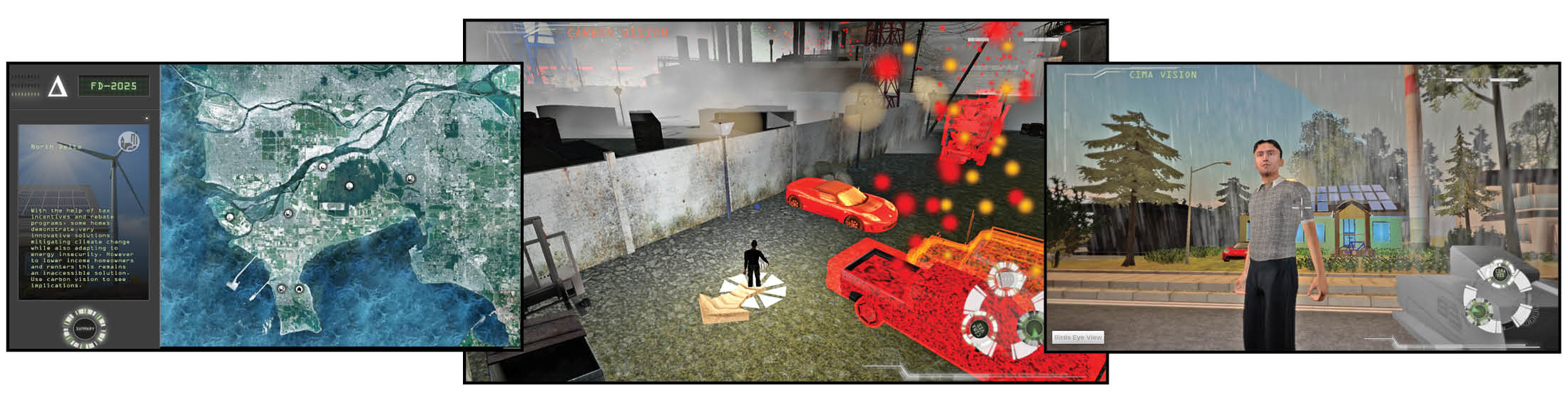
Screenshots of Future Delta 2.0 - Climate Change Video Game
Translational Cancer Genomics (TCG) cluster
The TCG cluster is involved in developing precision oncology approaches to individualize patient therapies, using imaging, genomics, proteogenomics and bioinformatics approaches.
The aim is to characterize drivers of treatment resistance and metastatic disease, to ultimately profile and predict high risk groups, identify combination targeting strategies, inform treatment, and contribute to individual and population prevention strategies, through testing of hypotheses related to cancer dynamics and evolution. These analyses will fuel clinically testable hypotheses and thus drive the creation of new results and treatment paradigms in cancer to reduce the burden of treatment resistance, and through national and international collaborations, translate these across BC, Canada and beyond.
The TCG leaders are pleased to be able to offer a funding program to support trainees in collaborative efforts in translational cancer genomics.
RESTORE (Regeneration and Stem Cells for Organ Rejuvenation)
We aim to transform medicine by discovering and translating advanced therapeutics based on engineered cells, molecules and materials.
We will foster convergent research aimed at accelerating options for devastating diseases such as heart failure, neural degeneration, diabetes and autoimmunity. Our initiative will serve as a catalyst for a new biotechnology sector important to the health and welfare of Canadians.
Theatre and Mental Health
We wish to scale up a theatre project with Canadian veterans that looks at using the arts to address men’s mental health issues.
Building on the success of Contact!Unload we aim to mobilize what we learned across Canada. In collaboration with counselors and professional theatre artists in four other Canadian cities, we wish to expand the reach of the project to veterans across the country.
Wingspan Dis/ability Arts, Culture, & Public Pedagogy
The Dis/ability Arts, Culture & Public Pedagogy Cluster is composed of and by the Wingspan Collaborative at UBC.
Wingspan is an intellectual ‘studio’ of interdisciplinary scholars in disability studies, arts, culture and public pedagogy across many disciplines who collaborate and establish research excellence on common projects regarding the rights of people with disabilities and who proactively promote the idea that while individual disabilities pose impairments, they should not be seen as deficits but instead as differences that enrich collective human experience and the arts. We identify variously as disabled, non-disabled or as artists who focus on disability aesthetics and linger in the liminal spaces between and among artist/researcher/teacher in the broadest sense of these terms, hence, we are Dis/A/R/Tographers in an unequal global world.